

for sale: murder weapon, used
{ getting crushed by it is a rite of passage, Iris Yaun, 2026 }
In 1983, the industrial chemical titan Union Carbide commissioned and built a gleaming modernist headquarters hidden between ridges in the hills of Danbury, Connecticut, officially known as the Union Carbide Corporate Center.
This unusually shaped nerve center, with ten branching wings splaying out from two central parking structures, sat elevated above the surrounding landscape, obscured from public view.
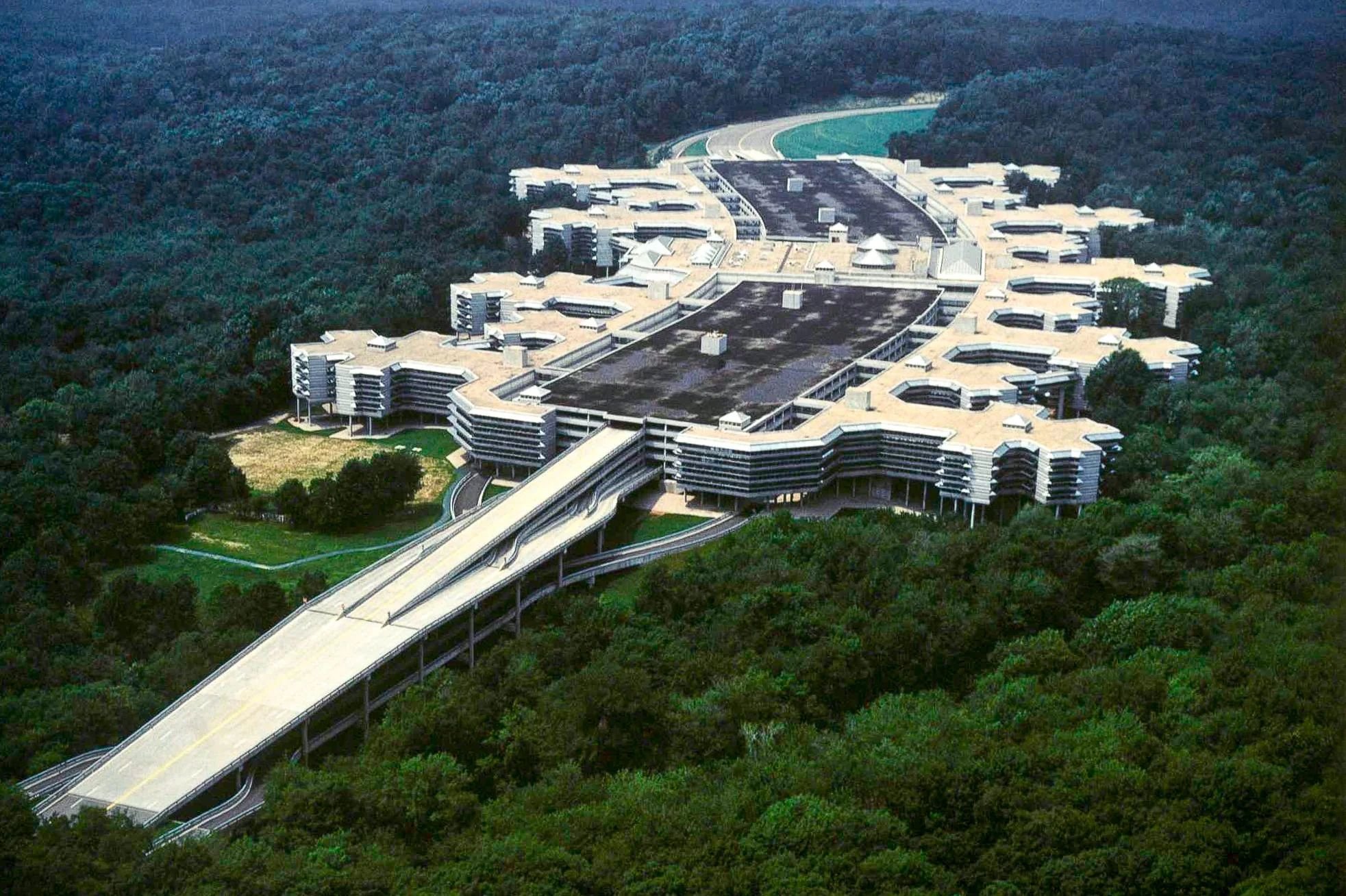
{ Aerial photo ca. 1990; H John Voorhees III / Hearst Connecticut Media }
The design was heralded by its architect, Kevin Roche, as a vessel for collaboration and innovation. In interviews about the design, Roche spoke of the intent of the structure using the same language with which a planned community might be described—he discussed the horizontal architecture as a vessel for collaboration through proximity and access.
You could see your coworkers, you could see your manager, and while you had your own places within the space, you were in the same space together. This would, by Roche’s estimation, lead to good ideas, and good decision-making.
The utopianism and horizontality operated in a facility occluded from view in the hills of Fairfield county, the decisions made in its interior involving only a thin slice of the corporate hierarchy.
{ untitled, Iris Yaun, 2026 }
It was the early eighties. Neoliberalism was consolidating, and cost-cutting, profit-maximizing business strategies and structures were proliferating. The industrial economy was winding down in the United States, broadly, and the financial economy was ascendant; a web was spun more and more intricately around the globe, one woven of subsidiaries and contractors. Material production, and accountability if applicable, occurred out there, for cheap, while proceeds flowed back here, gratuitously. Union Carbide was a paragon of this.
{ nowhen, nowhere, Iris Yaun, 2025 }
A year after moving into their Corporate Center, Union Carbide's Indian subsidiary had a minor but concerning leak at its pesticide plant in the city of Bhopal. Not much became of it at the time—but it was an ominous portent for the low lying plant in the midst of a population center. Negligence at all levels meant that Union Carbide’s plant in Bhopal was approaching dereliction, bereft of numerous essential safety systems, and this minor leak marked the critical point. A disaster was now inevitable.
And yet, production had to go on—then push came to shove.
{ untitled, Iris Yaun, 2026 }
In the early morning of December 3, 1984, an aging tank of methyl isocyanate, an intermediary in Union Carbide’s pesticide manufacturing process, ruptured and vented its liquid contents into the atmosphere. 40 metric tons of liquid MIC expanded into multiple millions of gallons of toxic, asphyxiating gas, heavier than air, and wafted across the landscape of Bhopal, India. Thousands died in their first minutes of exposure to the cloud of death. Thousands more in days. Hundreds of thousands lived through their poisoning, affected for the rest of their lives.
Condemnation rang from the Indian government and public. Union Carbide offered $5M in aid, rejected on account of how insulting a sum it was for the worst industrial disaster in history (a designation held to this day), and fought every attempt to collect the billions they fined Union Carbide, ultimately paying $470 million after contesting an initial demand of $3.3 billion.
Rapid downsizing and sale of Union Carbide assets and subsidiaries ensued. Union Carbide left Danbury within two years of the disaster. The Corporate Center was sold.
The snake without a head ceased its twitching, and was scavenged.
Union Carbide was liquidated over the course of years, and then sold to DOW Chemical in 2001, which made the purchase with full knowledge of the liability exposure, at least in theory. The executives of Union Carbide themselves moved on into obscurity, living out quiet retirements.
Not a single person in Union Carbide’s leadership was held accountable.
The then-CEO of Union Carbide was arrested on the scene after flying to Bhopal with a team of engineers. Bailed out immediately, he returned to the US and lived the rest of his life as a fugitive from extradition to India, protected by the US government from consequence. He died in obscurity at a Florida nursing home in 2014.
The only people found criminally culpable in connection with the disaster were seven employees of Union Carbide India Limited, convicted in 2010, twenty-six years after the disaster. These men, many in their seventies, were each sentenced to two years of imprisonment—the maximum the relevant statute allowed—and released on bail the same day. Their appeal has been pending ever since. None has served the sentence.
In the decades to follow, DOW Chemical would refuse all calls for it to clean up the site and adjacent area. Thus, the disaster drags on.
The site of Union Carbide’s plant in Bhopal has, to this day over forty years later, not been remediated. Methyl isocyanate is not the only pollutant; after decades of sloppy industrial chemistry on the surface, groundwater in Bhopal registers mercury levels between 20,000 and 6,000,000 times the mean, and trichloroethane at fifty times the mean. Lead, mercury, DCM, 1,3,5-TCB, chloroform, and more show up in the breastmilk of nursing mothers.
There are victims of the Bhopal disaster still yet to be born, still yet to be conceived.
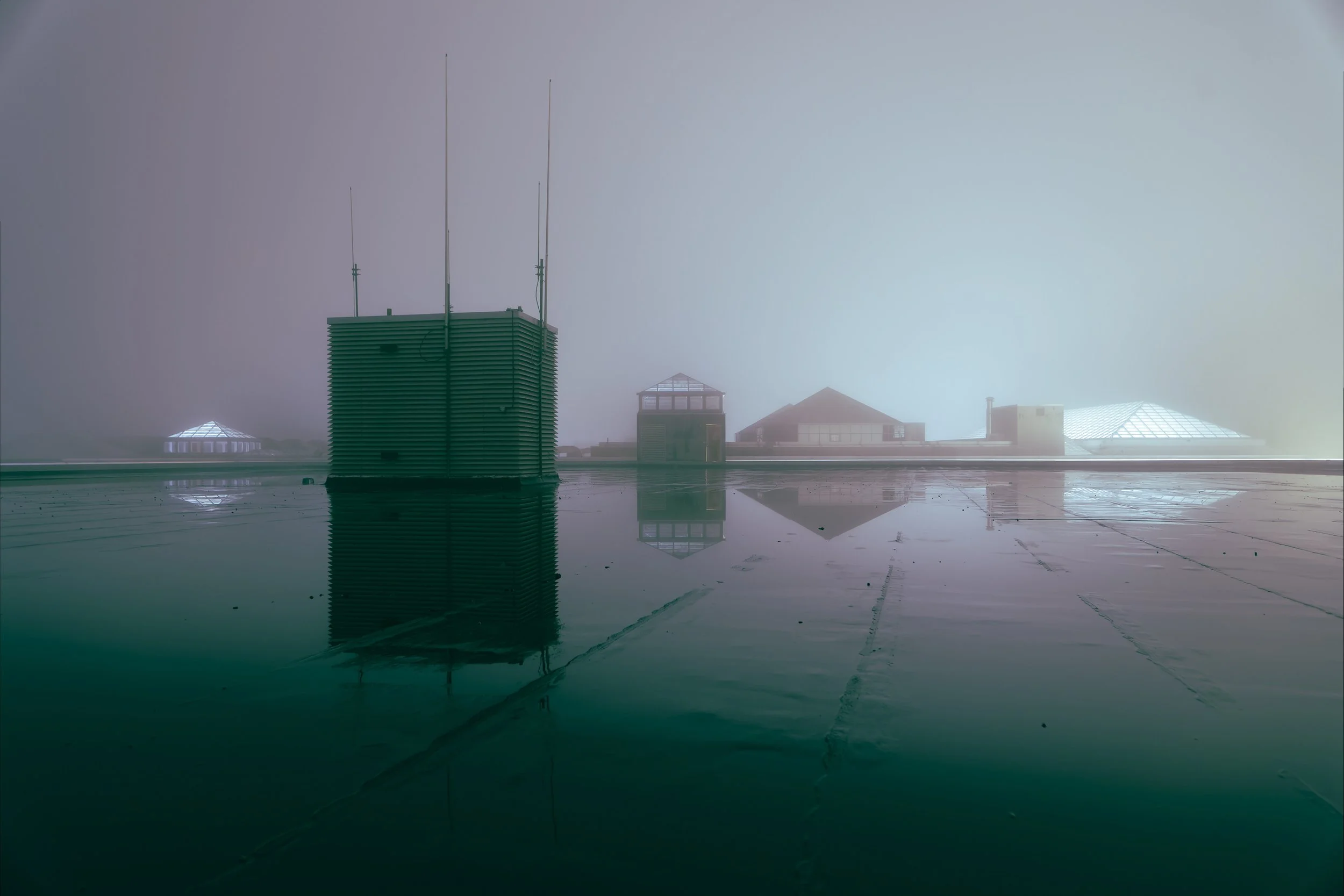
{ śūnyatā, Iris Yaun, 2021 }
The building still stands, all 2,100,000 square feet, but forty years later, it has not been made use of like it was planned to be. The air hangs still over hundreds of thousands of square feet, and has for years. Roche's hopes for his creation did not survive first contact with material reality.
Built for the present equivalent of $600M, this derelict has been shuffled from one private equity or corporate real estate group to another every few years since, the most recent of which being for $18M.
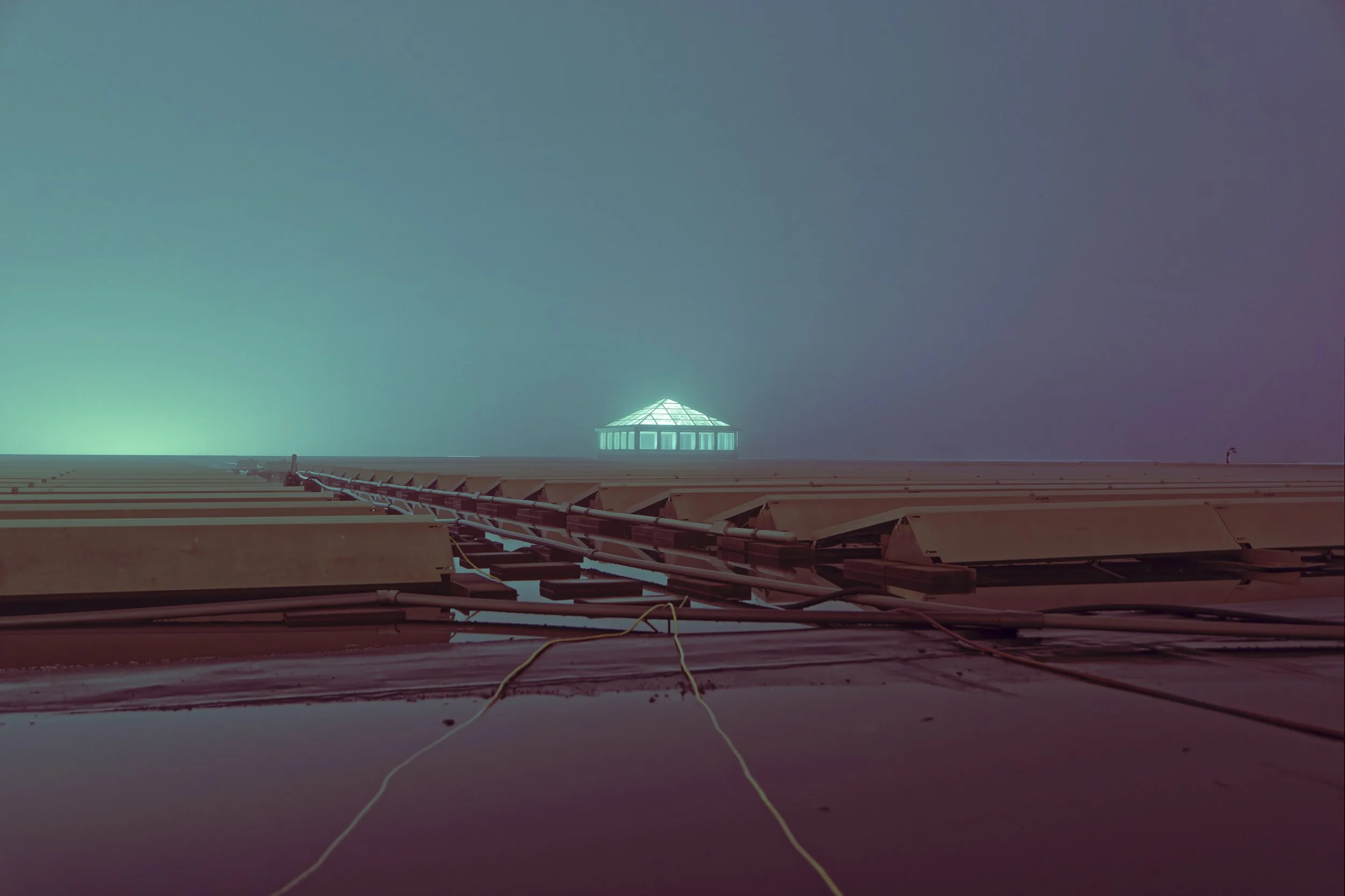
{ nothing, everywhere, Iris Yaun, 2021 }
The early years of the Corporate Center were a flurry of activity by Union Carbide—first moving in and settling, then just as quickly, moving out, followed by a long period of dormancy broken by half starts from various buyers at points. Of late, it actually facilitates a modest amount of activity. Much of the refurbished square footage is taken up by a regional medical organization, a few medical practices, a handful of other tenants of various scales, an event space, and even apartments in one wing.
This usage is something of a reclamation, perhaps, but it is no redemption of the legacy; in practice, it is probably even easier to overlook that this place has a history of any kind if you are going there for a yearly physical and scrolling in a waiting room and answering questions just as you did last year and saying “ahh” and scheduling for next year in one of its doctors’ offices.
In this the banalization of the structure by way of resale and dormancy is revealed. We see that perhaps Roche’s design was successful, in a way he himself may not have understood: it rendered the externality which now overshadows all explicit discussion of Union Carbide totally invisible to anyone inside the building.
Invisible, but inescapable.
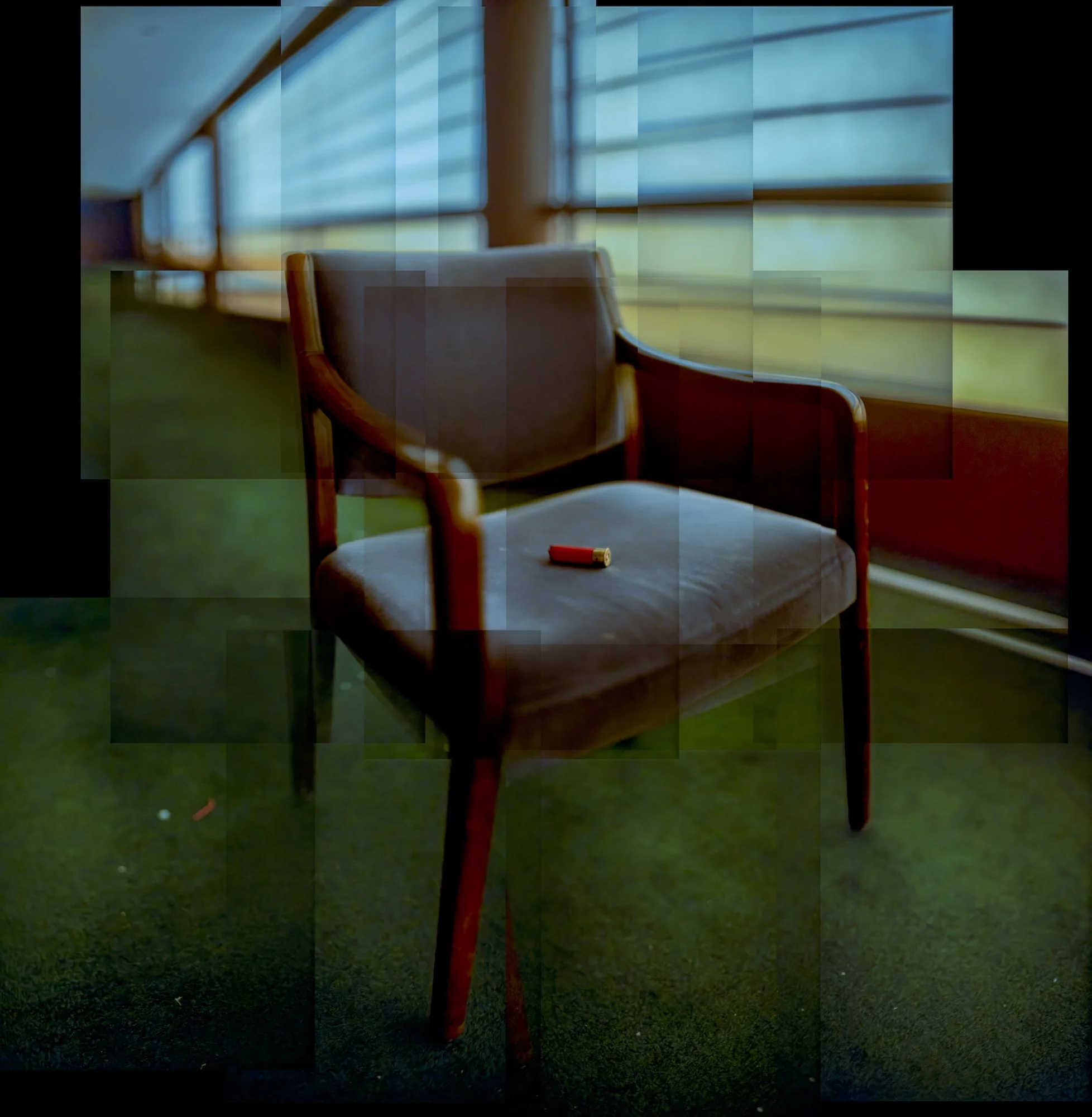
{ spent shotgun shell, no bullet holes to be seen, Iris Yaun, 2026 }
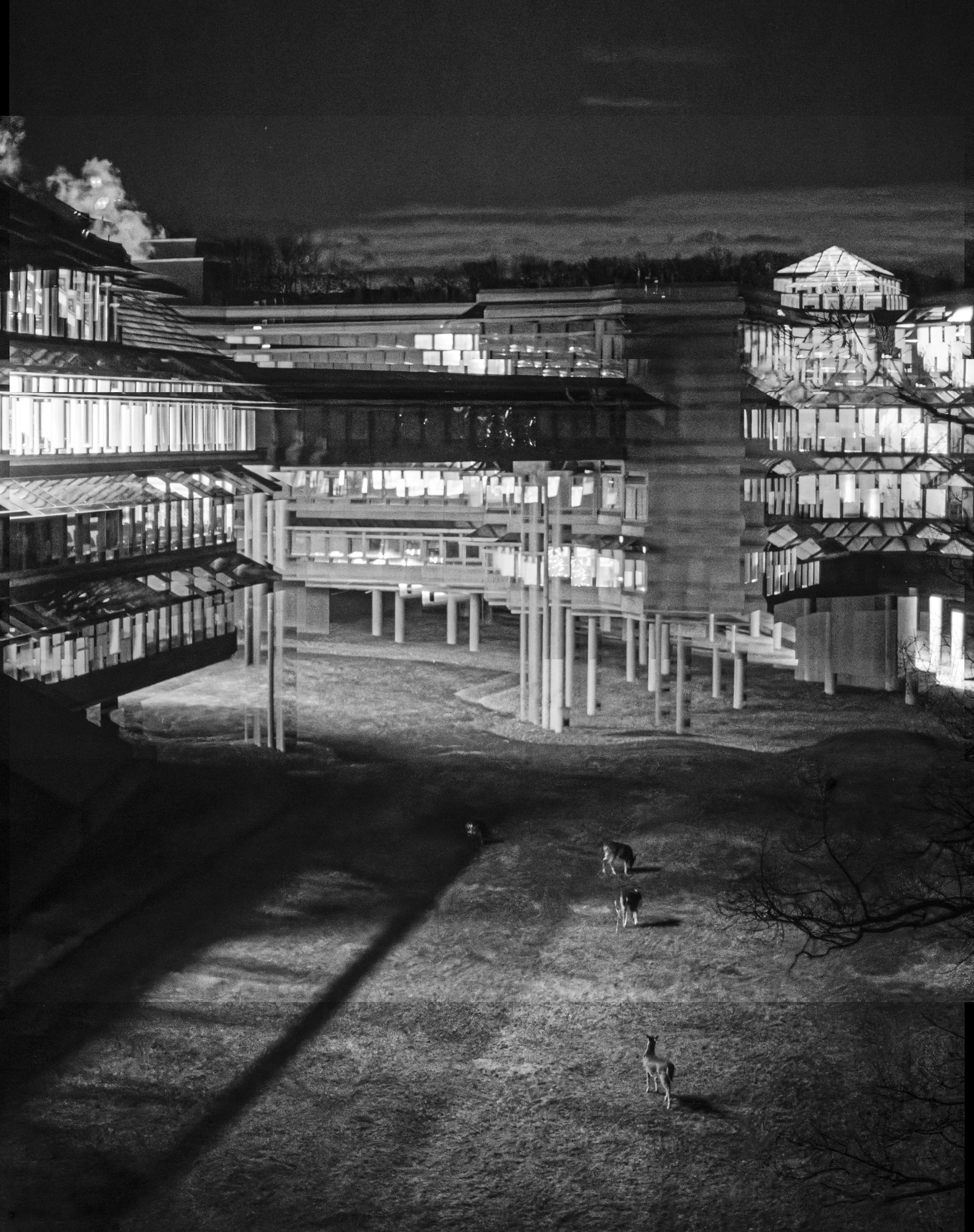
In the evenings nowadays, the deer wander through. Rabbits hop and perhaps even coyotes chase. The leaves sprout and green and foliate and fall and compact and rot into soil under snow. All the while, the sun and stars and moon spin.
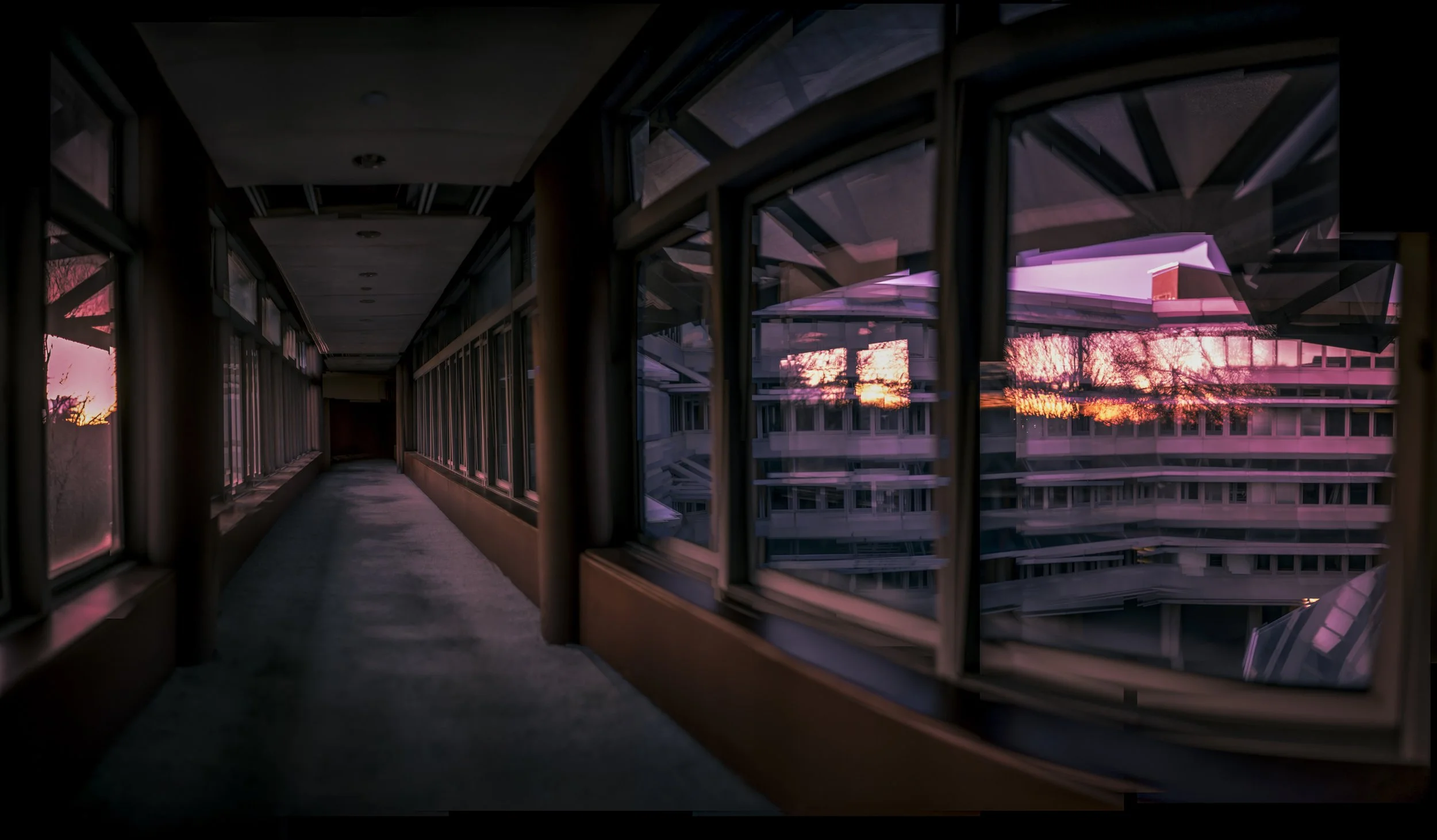
And so little takes place on the majority of the square footage. Hundreds of thousands of square feet sit silent, the dust undisturbed, but by the convective tendrils of air spurred by afternoon sunlight pouring through windows onto years-untrod carpet.

{ matrix multiplication is just birdsong in a different register, Iris Yaun, 2026 }
If the purpose of something is what it actually does in the world, and not just what it is stated to do, then perhaps the Union Carbide Corporate Center at Danbury is best understood as a murder weapon, discarded right at the scene of the crime’s commission—somewhere, it seems, no one bothered to look in the first place, and not for over forty years thereafter.
The Bhopal disaster did not happen; it is still being done.
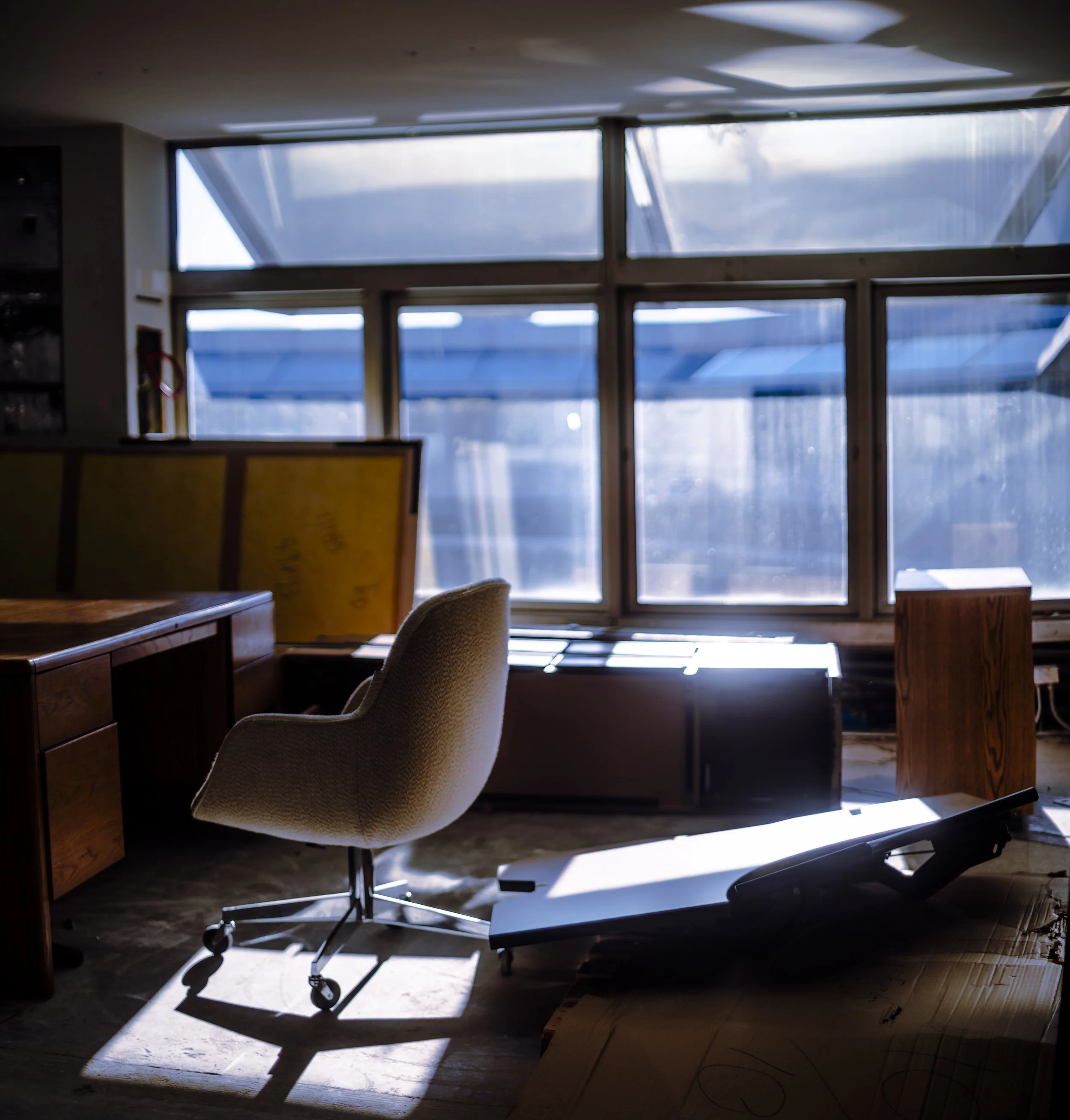
{ stillborn future, Iris Yaun, 2026 }